
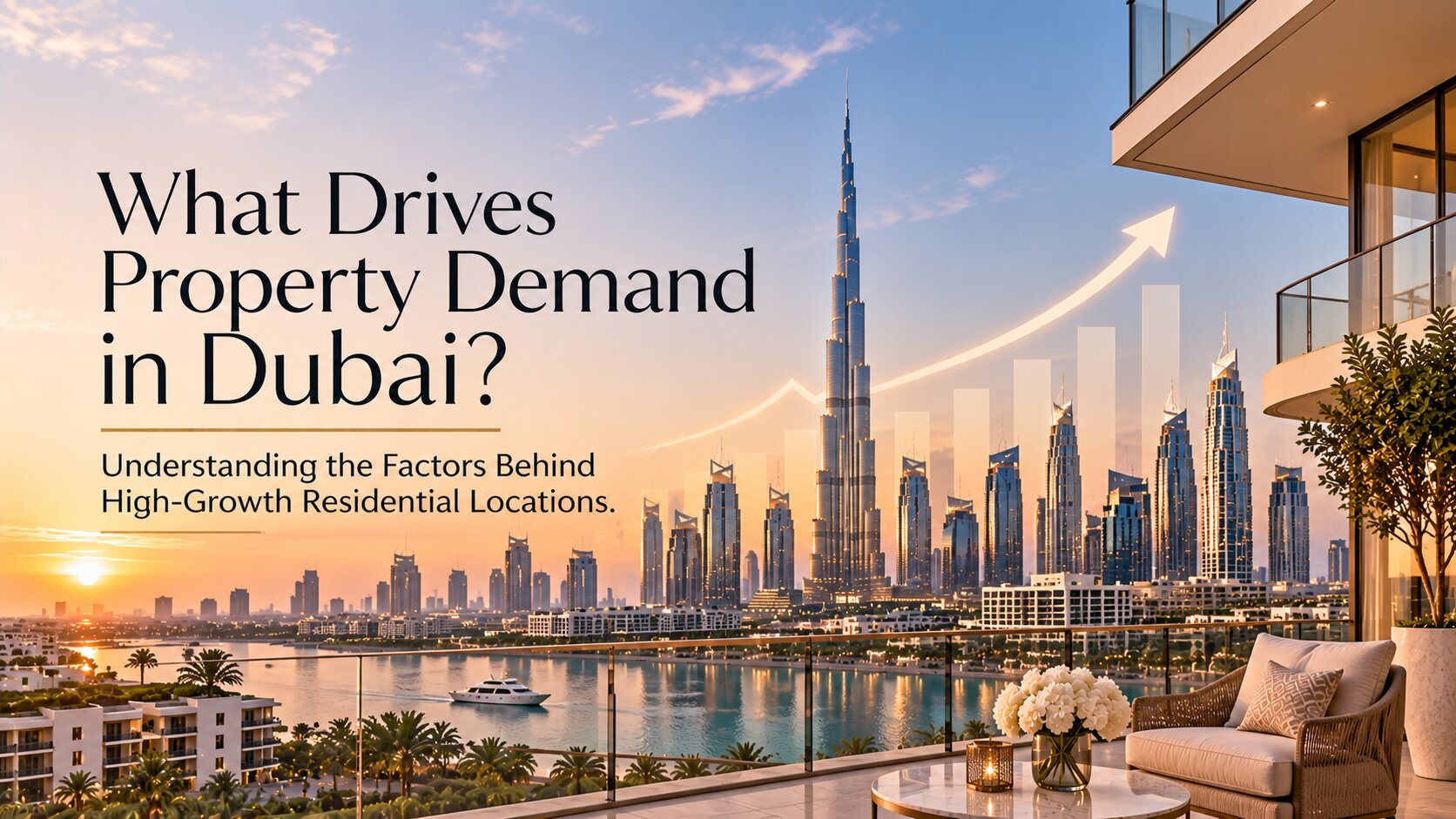
Dubai’s residential property market is shaped by several factors that influence where people choose to live and what they look for in a home.
While location remains one of the most important considerations, residential demand is rarely driven by a single element. Population trends, employment opportunities, infrastructure, lifestyle facilities and property quality all contribute to how attractive a neighborhood becomes.
For homebuyers and investors, understanding these factors can help create a more informed approach to choosing a property.
1. Population Growth and Residential Requirements
As Dubai continues to attract professionals, entrepreneurs and families, the need for different types of residential accommodation also evolves.
New residents have different requirements depending on their lifestyles, family sizes, workplaces and budgets. Some may prefer centrally located apartments, while others look for larger homes in quieter residential communities.
This creates demand across different property segments and locations.
For buyers, understanding the type of residents an area attracts can provide useful insight into its residential character.
2. Employment Opportunities and Business Growth
Employment centers play an important role in shaping residential preferences.
When business districts, commercial hubs and industrial areas expand, they can attract professionals who need convenient access to their workplaces.
Areas close to employment centers may become attractive to residents seeking shorter commutes and easier access to work.
Dubai South, for example, is strategically connected to aviation and logistics activity, while other parts of the city serve financial, commercial, technology and service industries.
For buyers, it is worth considering the current and planned employment landscape around a potential residential location.
3. Transport Infrastructure and Accessibility
Connectivity can influence how practical a neighborhood is for everyday living.
Access to major roads, metro stations and public transport can make commuting more convenient and connect residents to employment centers, schools and leisure destinations.
Dubai’s ongoing transport development, including Etihad Rail and the Metro Blue Line, reflects the importance of connectivity in the city’s wider urban growth.
However, proximity should always be assessed carefully. A development described as being near a transport project may still require a significant drive or walk to reach the actual station.
4. Lifestyle Amenities and Community Facilities
A residential location is more than the property itself.
Schools, healthcare facilities, supermarkets, restaurants, parks and recreational spaces all contribute to the overall living experience.
For families, access to schools and outdoor spaces may be a priority. Working professionals may place greater importance on transport, retail and dining options.
Communities that provide convenient access to everyday facilities can appeal to a wider range of residents, depending on their location and overall quality.
5. Property Design, Quality and Developer Reputation
The quality of a home plays an important role in a buyer’s decision.
Beyond the location, buyers increasingly need to consider how a property has been designed, the functionality of its layout, the quality of its materials and the standard of its construction.
The developer’s track record is also important. Reviewing completed developments, construction quality, delivery history and customer experience can help buyers make a more informed decision.
A desirable location cannot compensate for poor design or inadequate construction standards.
6. Pricing, Affordability and Market Supply
Property demand is also influenced by affordability and the availability of suitable homes.
Buyers compare property prices, payment structures, service charges, financing costs and the features offered by different developments.
The supply of new residential properties in an area can also affect competition between developments and the choices available to buyers.
For investors, it is important to look beyond expected capital appreciation. Rental demand, achievable rental income, vacancy periods, maintenance expenses and the total cost of ownership should all be considered.
No location or development can guarantee future returns, making independent research essential.
How Can Buyers Evaluate a Residential Location?
Before making a property decision, consider these practical questions:
- Does the area suit your lifestyle and daily routine?
- Are employment centers and essential facilities accessible?
- What infrastructure is already operational?
- How much new residential supply is expected nearby?
- Does the property offer good design and construction quality?
- Is the total cost of ownership suitable for your financial plans?
Looking at these factors together provides a more balanced understanding of a property’s suitability than focusing on one attractive feature alone.
Developing with a Long-Term Perspective
At Januss Real Estate Developers, understanding the relationship between location, residential demand and property quality is an important part of our development approach.
Our developments in Al Furjan and Dubai South reflect our focus on locations that form part of Dubai’s wider residential landscape.
We believe that successful residential development requires more than identifying a location with potential. It also involves creating homes that respond to the expectations of modern residents through thoughtful design, quality and attention to detail.
Property demand may be influenced by many external factors, but the quality of the home remains an important part of the decision to live there.The right property is one that makes sense not only on paper, but also in everyday life.